
fresh audio product: German neo-Nazis, the superrich
Just added to my radio archive (click on date for link):
September 5, 2024 Robert Pausch of Die Zeit on the far right’s strong showing in German regional elections • Rob Larson, author of Mastering the Universe, looks at the superrich
Fresh audio product: upsurge in Bangladesh, writing the Indian constitution
Just added to my radio archive (click on date for link):
August 29, 2024 Naomi Hossain explains the uprising in Bangladesh that deposed PM Shekih Hasina • Sandipto Dasgupta, author of Legalizing the Revolution, examines the transformation of India from colony to nation through the exercise of constitution-writing
Fresh audio product: better approach to China, reviewing Petro in Colombia
Just added to my radio archive (click on date for link):
August 22, 2024 Jake Werner on a progressive China policy (paper here) • Gabriel Hetland, author of this article, on the record of Colombian president Gustavo Petro, a leftist trying to govern a deeply conservative country
Fresh audio product: a look at Jeff Yass, another look at the “pro-worker” GOP
Just added to my radio archive (click on date for link):
August 8, 2024 Arielle Klagsbrun of the All Eyes on Yass Campaign on the insufficiently known right-wing funder Jeff Yass • Sohrab Ahmari and Hamilton Nolan debate the existence, real or imagined, of pro-worker Republicans
Fresh audio product: World Court v Israel, crypto throwing money at politicians, psychoanalyzing Biden
Just added to my radio archive (click on date for link):
August 1, 2024 Heidi Matthews analyzes the World Court’s declaration of Israel’s occupations illegal • Molly White on how crypto is spending its money in politics • Nausicaa Renner psychoanalyzes Joe Biden (article here)
Fresh audio product: French elections, the world that launched Vance, power
Just added to my radio archive (click on date for link):
July 25, 2024 Cole Stangler on the monumentally inconclusive French elections • David Palumbo-Liu on the Silicon Valley world that launched JD Vance as a politician • a brief bit from Jane McAlevey on power
Fresh audio product: Vance, fake friend of the working class; American political parties are weird
Just added to my radio archive (click on date for link):
July 18, 2024 Brandon Mancilla of the UAW looks behind the GOP’s pro-worker facade • Adam Hilton, author of True Blues, on the bizarre nature of the US political party system
We can manage
Dan Davies, The Unaccountability Machine: How Systems Make Terrible Decisions and How the World Lost Its Mind
Profile Books, £22.00
by Michael Pollak
why Hayek was wrong
Here is what mainstream economics thinks we know about managing the economy:
There was a debate in the 1920s and 1930s and central planning lost. It was proven, by people like Hayek and others, that central planning couldn’t work. Its outcomes would always be inferior to the market, and usually far inferior. Over the next century, with some fits and starts, everyone eventually accepted this conclusion and that’s where we are today. All that remains is a residual fight between those who think we ought to regulate a little bit around the edges and those who think every little bit hurts. That is the current division of the world’s ruling class, between neoliberals and ultras.
The problem is that large-scale planning is everywhere, and it started pretty much the same time as it was supposedly proven impossible. Admittedly it was still somewhat new even in the very last years of that debate. James Burnham wrote The Managerial Revolution in 1941 with the same air that many people wrote about the computer revolution in our lifetimes: it’s going to change everything. And then it did, vastly accelerated by the large-scale economic planning of World War II.
Huge corporations were not in themselves something new by then. The great trust boom of 1896-1904 consolidated most of US GDP into a small number of firms that persisted for most of the 20th century. But in the beginning, although they were enormous, they weren’t complicated. John Paul Getty used to read progress reports from all his wells every morning at breakfast. So, they were missing the fundamental problem that the entire debate was about: they weren’t drowning in information. The whole point of trusts was to produce single commodities for which there was practically infinite demand. All they had to do was focus on getting production costs down and the profits gushed in. Size didn’t make things more complicated; in many ways it simplified their situation.
Except that, as they began to integrate themselves vertically and horizontally and move into consumer marketing, this changed, for reasons that will be easy to comprehend once you’ve read this book: in an information management system, things don’t add up, they multiply up. In a flow of decisions, the number of total possibilities increases exponentially with each new option.
But that didn’t stop anybody from managing. There have been many fads, but the basic principle of management has remained the same, which we all know by experience and common sense. It’s called management by exception. That is, things in each department more or less run themselves, and higher management only intervenes when a problem is beyond the local resources. There are reports and monitoring and directives. There are budgets and internal negotiations. But this is basically how it works. Management of large entities is the management of self-governing units that contain self-governing units that contain self-governing units.
Once you have that model, plus a rigorous theory of information, there are lots of things to work out before you get a rigorous theory of management. But in practice the entire central planning problem has been dissolved. There is no “central” planning in the sense of people in the center having to deal with all the information and make all the choices. That never happens. Instead, new information is dealt with immediately, and usually definitively, by people closest to the action. Information that does get to the center has been filtered through many layers, so there’s exponentially less of it, and it comes with a bullet-point summary. Managing large organizations might still be overwhelming if you’re doing it wrong. But there is nothing inherently impossible about it. And people did it, extremely successfully, for the next 30 years, evolving what John Kenneth Galbraith referred to in a book title as The New Industrial State.
There is one more key point to note in passing that also completely explodes the idea that Hayek disproved the possibility of successful economic management—i.e., management—once and for all. Hayek’s central axiom was that all the information anyone needed to make economic decisions is contained in prices. And once you admit management exists, it’s obvious that isn’t true. Price is certainly a constraint that molds all other decisions. But often your decisions turn on other considerations. This is true at every level of the system. And there is nothing theoretical that prevents this non-price information from filtering up in reports and monitoring. Again, a corporation is not a market, we’re not haggling over prices with each other. We’re projecting and carrying out plans and adjusting them to what actually happens. There are always several factors to consider.
Lastly, as the definitive cherry on top, we’re in the information age. We’ve long had a mathematically rigorous definition of information, and it’s now obvious that anything can be digitized. Prices were the only data that came automatically in number form a century ago when Hayek was debating, but those days are long gone. He did pretty great, to be honest, in getting as far as he did without these tools. But he and his epigones are fully to blame for not showing the slightest interest in revising their favorite theory when everything changed. The theory was constructed to serve a political purpose. It is serving it still, and serves best unquestioned and sacrosanct.
So, what went wrong with the New Industrial State? How did we go from a world in which we thought there was nothing we couldn’t manage to a world in which we think there is nothing that we can?
enter Milton Friedman
Davies wreathes his argument ’round with qualifiers that Friedman was telling both owners and managers what they wanted to hear in a moment of felt crisis, and that if it wasn’t him, it would have been someone else. But he also makes it clear the man was one of the greatest propagandists who ever lived. He changed the way the world thought. There is a decent case to be made that neoliberalism began on September 13, 1970, when Friedman published “A Friedman Doctrine: The Social Responsibility of Business Is to Increase Its Profits” in the New York Times. It’s 3,000 words, and Davies spends 1,500 explicating it. Not because it was opaque at the time—even his worst enemies have always envied Friedman’s punchy clarity—but rather because Davies has to explain to us today why in 1970 this article struck Friedman’s contemporaries like a thunderbolt. It’s because they inhabited a worldview that has now almost completely vanished in large part because of his success.
Just registering the title is a shock. Isn’t that what everyone thought back then? Isn’t the idea that corporations even have a social responsibility the very recent and maybe already fading fad of ESG?
Well, no, actually. At the apogee of all-powerful management, profit was thought of simply as one of several constraints. You had to make enough to pay a dividend. But beyond that, the widely scattered stockholders had almost no say and the corporation was free to explore the space of possibilities. How could make they an impact? What should they be preparing for?
Corporations really used to think like this. And it clearly wasn’t bad for capitalist society, which never thrived so much as during those 30 years still routinely tagged as “Golden” and Wirtschaftwunder. A large part of why they thought like this was because they could. It was the way their postwar decision-making machinery had evolved: to deal not only with predictable variation but with uncertainty—with what can’t be predicted.
Friedman convinced us to dispense with most of that decision-making machinery. In his well-developed libertarian worldview, all those parts of the organization that weren’t immediately making money were stealing from the owners. It was both a moral outrage and a gross inefficiency. And he convinced the world, both through his own prolific writing, speeches and TV series, and by inspiring an army of well-funded tireless zealots. Davies’s intellectual history here is concise and surprisingly new, at least to me. And the religious fervor Friedman inspired hasn’t died down a bit. Just ask Jeff Yass.
For Friedman, the problem with matryoshkas of autonomous units is precisely that there is too much autonomy. They have to be reined in tight, and he and his followers presented two chief ways to do it. The first were stock options, which aligned the interests of the managers with the stock owners. That alignment worked. And the second, which had a much bigger impact—because it affected all firms, not just those who were publicly traded—was the leveraged buy-out (LBO).[1] Once a firm is loaded up with debt, making large and constant profits becomes a literally existential need. At that point, the title of Friedman’s article no longer needs to be argued for; the only choices left are constant profit or bankruptcy. All other concerns have to be pushed aside in the fight for survival. The worst of it is that all firms that aren’t already LBO’ed scurry in its shadow, forced to emulate its imperatives to keep from getting eaten. It’s a pretty straight line from that article, through The Journal of Applied Corporate Finance,[2] to the hellscape of private equity that we live in today.
the road not traveled
Cybernetics is another thing that had its origin in World War II, specifically in the math of trying to program an antiaircraft gun to shoot down a plane. Knowing the speed and direction, and the probable evasive maneuvers, the problem was where to aim. The key was designing a system of self-correction based on past results. It had to correct in such a way that it kept improving, rather than overshooting too far in both directions. It turned out the math that made this possible had already been developed by thermodynamics. Cybernetics applied that math to the science of binary choices and invented information theory.
Cybernetics was incredibly popular in the 1950s and 1960s. It was cited constantly, and explicitly claimed as a model by everything from self-help books (Dianetics got the second half of its name from there) to high-brow novels (Pynchon) to the dominant school of sociology (Talcott Parson’s Systems Theory aka Functionalism). And then it kind of disappeared in America, because it turned out you could use information theory to make enormous amounts of money in computers. As Davies points out, you had to be an oddball not to take that deal, and the people who continued to develop the original theory were indeed a collection of very British eccentrics. The most productive and charismatic of them was Stafford Beer who, from the very beginning, because it was his job, was developing and applying cybernetics to the management of large organizations.  That New Industrial State? He was its premiere theorist. He wrote book after book, each building on the last, trying to capture in diagrams and formulas how the new multidivisional corporation worked. It was clear that the bumblebees flew. But how?
Management cybernetics naturally attempted to theorize management as the management of information. And the first problem it ran into was exactly what Hayek ran into when he theorized markets in terms of information: there is just too much of it for the human brain to handle. Or even, they realized, for the biggest computer we can imagine to handle.
Cybernetics, because of its origins, thought about computers and their possibilities from the outset. The standard cybernetic model is “how many possible states of a system are there to choose from?” And how many binary choices do you have to work through to get to each of them? Management cyberneticians soon proved conclusively that if you apply these terms to large corporations, the numbers grow literally exponentially until the number of possible states is more than the number of atoms in the earth. (The proof is in Stafford Beer’s magnum opus, Brain of the Firm. It’s quite followable; unlike Weiner, he joys in childish diagrams and simple math to get his point across.)
So, the ideal of knowing everything so that we can rationally compute the optimal course is even more impossible than Hayek knew. Powerful computers don’t solve it. We’d need a computer bigger than the world we’re computing. And that’s not even counting the always substantial cost of gathering information and keeping it updated.
Fortunately, that’s not how we actually do things. That’s not how any decision-making entity does things. And there are trillions of them around. They’re called living beings.[3]
The subtitle of Norbert Weiner’s 1948 book, Cybernetics (which coined the term), is Control and Communication in the Animal and the Machine. And by “control” he means “regulation.” In Weiner’s model, cybernetic systems are jointed together by “regulators,” aka governors (which keep things within limits), not controllers (which specifically order each move). 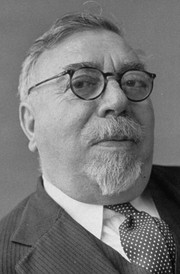 Because the whole soul of cybernetics is that you can’t control everything because you can’t know everything. You can only regulate. In fact, Weiner originally derived the term “cybernetics” from the Greek word cybernet, which means “coxswain on a trireme” (very much a manager position, and not even high one, like a general or even the captain). But cybernetics shows how a very sophisticated and flexible automatic decision-making system can easily emerge from a small set of interlocking simple regulators. It works exactly the same way that a chess program that can beat you arises from a small collection of simple algorithms.
There are two ways we (and all other living things) actually deal with the inconceivable torrent of possible states of things:
- We attenuate the information coming in by filtering out everything irrelevant. Perception itself —inherent in every action, even for amoebas—is always a matter of focusing, of fuzzing out the background.
- We amplify our ability to deal with the relevant by creating maxims or heuristics, which are basically rules for dealing with X that usually work. Every time we do that, whether through developing habits or instincts or writing formal instructions, we are automating the decision-making process. This allows us to largely deal with it below the level of conscious attention until it hits one of those cases where it doesn’t work. Which is management by exception in a nutshell.
It is probably not an accident that cybernetics made much more intuitive sense in the golden age of American manufacturing. Industrial engineering is very much about supervising an interacting system of humans and machines.[4] Human and mechanical regulators of feedback existed on factory floors long before they were theorized. They simply grew out of the facts of factory life: things vary, things break down, every process needs a tender. That’s what it means to manage.
I should emphasize that two qualitatively different things are being managed in this model. One is the flow of product, which goes through predictable mishaps. Or perhaps I should say semi-predictable: you know what might go wrong, and you know what to do when it does, but you don’t know when or how much (or you would have prevented it). This is what leads to feedback loops: stuff goes in; stuff comes out that isn’t exactly what you were hoping for; adjustments are made to the stuff going in. Eventually regularities set in, e.g., you end up predicting a certain amount of loss and producing that much more; you end up with an inventory reserve and monitor its rise and fall; and the process gets increasingly predictable because of the feedback and monitoring.
The second thing that is being managed is the attitude of the firm towards the future. What new activities should we invest in, what old ones should we phase out? What do trends point to? And lastly, but of keystone importance: how do we deal with what we didn’t predict and aren’t set up to deal with? Because you can also count on that happening at semi-regular intervals.
These two classes of things might be thought of as the higher and lower management, the shop floor and the head office. And for management to be effective in a changing world, they have to be closely connected. Because—and this is at the heart of Stafford Beer’s “viable systems” model—the way an organization perceives the large, unpredicted events is through small unpredicted events: by hearing about and studying the anomalies, the cases where the maxims didn’t work, the possibilities that weren’t taken into account.[5]
In the Kuhnian model of scientific revolution, most of the time we do normal science: there is an agreed-upon framework against which everything is interpreted. But there are always things that don’t fit. These anomalies build up, but we only change the framework when someone comes up with a new framework that works better, where better means that it hugely reduces the number of anomalies.
Beer’s model of management is very similar. For him, the main purpose of computers for central managers is not to give them infinite information but the opposite. It’s to run probability filters on everything that is happening to detect the things that are outside the normal distribution (which itself usually has to be constructed through a logarithmic transform or something similar). That way escalation can be preventive—the organization can be structured to notice and investigate before problems get out of hand. And that process culminates in the regular discussion of weird cases, the ones that didn’t fit the decision-making rules. In this system, the guiding question for higher management always has to be: How can we reorganize to improve things; and when will the costs of change be less than the costs of inaction? This isn’t something that can be done mechanically. It’s something creative you learn by experience, and literal trials and errors.
And having explained all this (in greater and funnier detail) Davies explains how neoliberalism plus human weakness in managers has produced exactly the opposite, a world in which the anomalous cases are never considered until it becomes obvious to everyone that the governing framework is wrong, but there is no process in place to change it.
Stafford Beer had a favorite metaphor for this, which he got from hanging out with experimental neurologists: the decerebrate cat, where
neuroscientists cut the connection between the cerebrum of a cat and the rest of its brain. The animal lived the remainder of its short life in a peculiar state of dysfunction—it could walk, eat food that was placed in front of it, and even clean itself, but it was no longer capable of purposive action. It could survive only in an unchanging environment; it could no longer respond to unanticipated stimuli.
And basically, that’s where we are today. Our decision-making machines—our large organizations—in both the economy and government, don’t work. It’s not an accident they consistently turn out bad decisions. They’ve been systematically gutted. And so long as organizations are guided by neoliberal principles, they cannot be fixed. Because the first principle of neoliberalism is to clean out all the dead wood that doesn’t directly lead to profit (or in government, to immediately measurable results). Everything oriented towards analyzing anomalies and adapting is defined as “excess capacity” that a consultant will tell you to cut when you turn to him in despair that you’re overwhelmed. But cut them out, and you’ve cut out the organization’s ability to learn.
Despite this review being so long, I’ve only followed out one string in a book that weaves dozens of them together like a rope. The author is absurdly widely read, and the book is packed with Aha moments while at the same time being short and fun to read.
It also has a simple answer to What Is to Be Done about neoliberalism: get rid of leveraged buyouts, not by banning them (impossible) but by making a simple revision in the law of limited liability corporations so that they are responsible for all the debts of any entity they buy—so that if it goes bankrupt, they take the hit.
But for me, the central reasons you should read this book, besides just the enjoyment, are:
- It gives you a skeleton key to cybernetics so that you’ll read the Stafford Beer classics. I certainly never would have without it. I didn’t even know they existed. Maybe if enough of us do, someone will bring them back into print. The road not travelled is worth reconsidering now that we’ve come to a dead end.
- It uses that same cybernetic skeleton key (along with a subtle intellectual history, and an extremely smart punch list of critiques) to explain very satisfyingly how economics went so wrong—how it created our current “normal” framework in which the market is supposed to do all our thinking and managing for us. And why, if you honestly think of the economy as something that makes decisions based on information, that makes no sense.
Michael Pollak is a writer who lives in New York. Disclaimer: He is also a friend of Dan Davies. But you probably figured that out.
[1] Early grasp of its central significance is why Left Business Observer, founded in 1986, shares the initials LBO.
[2] See the section in Davies’ Chapter 8 entitled “The Most Ideological Journal of Them All”
[3] That image I started out with, of gestalts within gestalts within gestalts? That’s biology from bottom to top, from the cell to the ecology. In fact, the concept of ecology was originally a cybernetic model, first systematically elaborated in the writings of Gregory Bateson, a member of the first Macy’s Conference on Cybernetics. And Stafford Beer’s “viable systems model,” perfected in his masterwork Brain of the Firm, is explicitly modelled on the human body. When he says “viable” he very much means transforming inputs to outputs; with subdivisions (organs) reporting back and forth to submanagement (the spinal cord and cerebellum); and the organism dealing with threats and continuing to survive. Adapting and continuing to survive is what viable means.
You in the head office don’t know how your kidney or liver is dealing with the variable stream of what you are throwing at it. But autonomous and automatic decisions are constantly happening down there, flipping the switches needed to keep a million titers within viable bounds.
[4] Davies provides a wonderful thick description of this in a book he co-wrote (as kind of a visible ghost-writer) about the engineering and manufacturing of the Brompton foldable bike.
[5] There are also of course classical Black Swan events that can’t be perceived even this way, like 9/11. But they are related, insofar as the only thing that will stand a large organization in good stead in such cases is its ability to quickly and successfully reorganize itself, a capacity only gained through exercise. (Ashby famously and confusingly calls this sort of flexibility “ultra-stability,” by which he means “the ability to absorb huge shocks and survive.”)
Fresh audio product: British and Iranian elections, remembering Jane McAlevey
Just added to my radio archive (click on date for link):
July 11, 2024 Richard Seymour discusses the British election (Sidecar article here) • Trita Parsi, the Iranian election • remembering Jane McAlevey with a 2017 BtN interview excerpt (catalog of interviews here)
Jane McAlevey: the Behind the News interviews
Jane McAlevey, the organizer, writer, and frequent BtN guest, died on July 7. To remember her, I ran an excerpt from a March 2017 interview with her. Here’s what I said to introduce the interview, and below that is a list of her appearances on the show. The dates are links to the entry in my radio archive.
Jane McAlevey, the organizer, writer, and human dynamo, who appeared on this show nine times over the years, starting in 2012, died on Sunday, July 7, at the age of 59. I met Jane over 20 years ago, and loved and admired her enormously. The word tireless is a bit of cliché, but she was exactly that. I feel the loss personally, since we were real-life friends, but those feelings pale next to the loss to the workers’ movement.
Jane had been fighting multiple myeloma for some time with the same fervor she brought to organizing workers, but the disease proved a more formidable opponent than the employers she confronted for over 25 years. She was most famous for working with health care workers and teachers in the US, but she had a worldwide influence through her books and consulting work.
She was full of ideas—developed through practice—on how to organize unions, which she saw as essential to making this a better society. Among those ideas: organize to win rather than make symbolic points. Make sure you have very strong support for strikes and other militant actions—don’t start something you can’t carry though. Understand the larger power structures that workers and their employers operate in. Involve workers in negotiations and don’t just treat them like extras in your play. Identify the natural leaders of a workforce you’re trying to organize and focus on enlisting them in the cause.
If you want to learn more about Jane’s career and philosophy, check out her books, like Raising Expectations and Raising Hell, from 2012, and No Shortcuts: Organizing for Power in the New Gilded Age, from 2016. Her website is here.
I’d say Rest in Peace, Jane—but that wasn’t her style.
Behind the News interviews with Jane McAlevey
April 15, 2021 Jane McAlevey on why the union lost to Amazon in Alabama (Nation article here)
January 24, 2019 Alex Caputo-Pearl, president of the Los Angeles teachers’ union, and Jane McAlevey, author and organizer, on the union’s great victory in their LA strike, protecting public education against the plutocrats’ attacks
October 25, 2018 Liza Featherstone and Jane McAlevey on #metoo, one year later, and why Hands Off Pants On would be a good model
December 7, 2017 Jane McAlevey on power, strange alliances, and serious threats to workers • Jane McAlevey and Liza Featherstone on sexual harassment, capitalism, and power
March 30, 2017 Jane McAlevey, author of No Shortcuts, on real organizing, not fake organizing
July 16, 2015 Jane McAlevey, author of Raising Expectations (and Raising Hell), on Alinsky, power, and organizing
February 19, 2015 Jane McAlevey, author of this article (and this book) on Bruce Rauner’s attack on public sector unions in Illinois and on how labor and the left need a theory of power
April 3, 2014 Jane McAlevey, author of Raising Expectations (and Raising Hell), on the UAW in Tennessee, etc.
December 6, 2012 Jane McAlevey, author of Raising Expectations (And Raising Hell), on how to revive the U.S. labor movement
Fresh audio product: Hamas is winning, updates on the US carceral state
Just added to my radio archive (after a week off):
July 4, 2024 Robert Pape on how, despite Israel’s murderous onslaught on Gaza, Hamas is winning (article here) • Wanda Bertram on how US incarceration rates stack up against the rest of the world (massively), and other news on crime & punishment (report here)
fresh audio product: Israel and its Arab neighbors, school scheming
Just added to my radio archive (click on date for link):
June 20, 2024 Steven Simon on Israel and the Arab states’ relations with it • Jennifer Berkshire, co-author of The Education Wars, on the right-wing’s latest educational ploys (and here’s Marcus Brown’s website that I mentioned in the intro)
fresh audio product: Mexico and radicals on the run
Just added to my radio archive (click on date for link):
June 13, 2024 Edwin Ackerman on the Mexican elections, and the reasons for AMLO’s immense popularity (Sidecar piece here) • Joel Whitney, author of Flights, on radicals’ and revolutionaries’ battles with the CIA
fresh audio product
Just added to my radio archive (click on date for link):
June 6, 2024 Siddhartha Deb, author of Twilight Prisoners, on the Hindu right and its poor showing in India’s elections • Sean Jacobs, New School prof and publisher of Africa Is a Country, on the ANC’s poor showing in South Africa’s elections
Fresh audio product: the Constitution cult
Just added to my radio archive (click on date for link):
May 30, 2024 Aziz Rana, author of The Constitutional Bind: How Americans Came to Idolize a Document that Fails Them, on how our founding document constrains democracy but we worship it anyway


 LBO News from Doug Henwood