
More KPFA…
More KPFA news. If you’re in the Bay Area and free on Thursday afternoon, please hit the picket line!
Lunacy at KPFA
No doubt many of you are sick of the whole Pacifica mess, but this is really important: if these layoffs go down, it’s gonna be 9/11 and chemtrails. From the excellent historian of Pacifica, Matthew Lasar: How the KPFA Morning Show almost killed me (and why I want it to live) | Radio Survivor.
Taking the measure of rot
[I gave this talk at a very good conference, New Deal/No Deal, at Berkeley’s Institute for Research on Labor and Employment, on October 29. The panel chair was Michael Reich, who was the main organizer of the conference along with Richard Walker of the geography department. The dual themes were reflecting on the New Deal of the 1930s and how we’re not getting anything remotely comparable in the 2010s.]
roots of crisis
We all know the story of the proximate causes of the economic crisis – a housing bubble enabled by not merely massive applications of credit, but credit packaged in unimaginably complex and obscure forms and a dispersion of responsibility that comes with securitization. There was a synergy of troublemaking here. Mortgage debt, after rising gently through the 1980s and 1990s, exploded after 2000, rising from about 60% of after-tax income to a peak of 100% in 2007. We know that lending standards deteriorated, to where the only requirement for getting a loan was having a pulse—and I bet you could even find some exceptions to that rule. Downpayments became optional. The habit of packaging mortgages into bonds and selling them to distant investors removed any incentive for the original lender to scrutinize the creditworthiness of borrowers—and allowed trouble to proliferate around the world when things went bad. My use of the word “bond” in the last sentence is as quaint as downpayment became, because the finest minds of Wall Street assembled all manner of mortgages into complex derivatives that no one, even some of the people who sold them, could understand. (Ok, “no one” is an exaggeration. I think the actual count of people who undersood these derivatives was in the hundreds.) Investors had absolutely no idea what horrors were hidden in the structured products they bought, even though many came with a Aaa ratiing. Either the rating agencies didn’t know what they were grading or didn’t care—the issuers of the dodgy securities were the one who were paying their fees; as one rater put it in a famous email, they’d rate things put together by cows. Of course they weren’t put together by cows—the were put together by investment bankers, who are far more dangerous.
All this is true. But it’s a mistake to look only at that part of the story. Today’s crisis also has a prehistory going back to the problems of the 1970s and the neoliberal prescription for fixing those problems.
The “problem” of the 1970s was, of course, stagflation. The stag part is actually rather misleading; the expansion of the Carter expansion saw job growth four times as rapid as that of the George W. Bush expansion, and GDP growth half again as high. For the whole decade, GDP growth in the 1970s was also half again as high as so far in the 2000s—but such a comparison for employment is impossible, since job growth in this decade is slightly negative, the only such period in U.S. history for which you can say that, The gap between job and GDP growth is striking, and gives a hint of the contrasting class dynamics of the two eras. By the way, the recovery so far, such as it is, is even more strikingly imbalanced, with profits up about 50% over the last year and wage and salary income up just 1%. A 3-to-1 ratio is average for the first year of a recovery; 50-to-1 is unprecedented and scandalous.
But the inflation part of the 1970s was important. The CPI maxed out at nearly 15% in 1980, and hit an 18% annualized rate in March of that year. Wartime inflations were common in U.S. history, but never this chronic and deteriorating sort of thing.
But inflation wasn’t just about rising prices—it was also about sagging productivity, falling profitability, limp financial markets, and, less quantifiably, a general loss of discipline in the workplace and the erosion of American power in the world. Corporate profitability, which had peaked at 11% in 1966, fell by two-thirds to under 4% in 1980. With high inflation, holding bonds became a losing proposition; Treasury bonds were nicknamed certificates of confiscation. Stocks turned in one of their worst decades ever—not as bad as the 1930s, but close.
But it wasn’t just a matter of numerical indicators. The U.S. lost the Vietnam War, and oil and other commodity exporters were jacking up prices, and the Third World was demanding redistribution on a global scale. Though it’s largely forgotten now, the working class was restive and rebellious. Formal strikes were common (as they were in the 1950s and 1960s), but so were the wildcat kind. Back in 1970, Richard Nixon called out the National Guard to deliver the mail because postal workers went on a self-organized strike (they had no union). The strike prompted the reorganization of the postal service—and, shocking to someone looking back at this in 2010, authorized postal workers to form unions and bargain collectively. Later in the decade, we heard a lot about the blue-collar blues, and in 1978, the appropriately named country singer Johnny Paycheck scored a hit with “Take This Job and Shove It.”
problem solved!
Obviously something had to give, and what gave was the working class, domeestically and internationally. Paul Volcker came into office declaring that the American standard of living had to decline, and he made it happen by driving up interest rates towards 20% and creating the deepest recession since the 1930s. (We just beat that record, but it took 30 years!) To the one-sided class war, Reagan added the ammunition of firing the air traffic controllers—the very opposite of what a Republican president had done with strikers only a decade earlier—and it was open season on organized labor. Wages and social spending were squeezed, and the deregulatory agenda that began under Carter was intensified. Abroad, Latin America was thrown into debt crisis, a crisis that for a while threatened to take down the global banking system—but instead, the problem was solved through the now-familiar neoliberal agenda of privatization and opening up to cross-border trade and financial flows.
The program was very successful. The recession scared the hell out of the working class; people were glad to have a job, and wouldn’t dream of telling anyone to shove it. Business became essentially free to do whatever the hell it wanted to. Profitability recovered strongly, rising throughout the 1980s and 1990s to a peak of over 8% in 1997—not quite 1966 levels, but still more than twice the trough of 15 years earlier. It took a while, but productivity finally joined in. In the military–political sphere, U.S. power was enhanced, and we kicked the Vietnam Syndrome too. Discipline problems were a thing of the past.
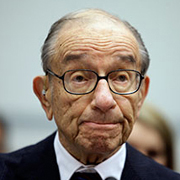
There were a few interruptions—a stock market crash in 1987 that looked scary for a while, a long stagnation and jobless recovery in the early 1990s, the bursting of the dot.com bubble ten years later. But all in all, the system managed to recover from, even thrive, on its troubles, and state managers perfected their bailout techniques. Of course, each bailout laid the groundwork for the next bubble, but Alan Greenspan famously said that one needn’t worry about bubbles because one can always repair the damage after the fact. He lately seems chastened on that topic.
fly in ointment
But through those bubbles, busts, and recoveries, one constant persisted. A system dependent on high levels of mass consumption has a hard time living with a prolonged wage squeeze. I mean that not only in the economic sense, but also a political/cultural one. American life is very insecure and volatile, and the ability to buy lots of gadgets assuages that to a considerable degree. Mass consumption staves off what could be a serious legitimation cdrisis. For the last few decades, the economic and political contradiction has been managed, if not resolved (not that it could ever be) through the liberal use of debt—credit cards at first, and then mortgages from the mid-1990s onward. The explosion in household credit —from 65% of disposable income in 1983 to 135% at the 2007 peak (most of it from mortgages, by the way)—is what made the booms and bubbles of the last three decades possible. This is especially true of the 2001–2007 expansion, which featured the slowest employment and aggregate wage growth of any cycle since numbers the numbers begin in 1929. Without the massive cashing in on appreciating home equity—Americans withdrew several trillion dollars worth of home equity during the decade of boom, and spent a lot of it—consumption would have languished and the home improvement business would have gone under. And since we have almost no domestic savings, much of the cash for that adventure came from abroad, from places like the People’s Bank of China.
But it seems impossible to go back to that old model of doing an economy (though we still haven’t shaken the foreign borrowing habit). The housing market is still busted, as are the consumer credit markets. Retail spending has picked up from the depths of 2008 and 2009, but we’re not going back to the old pace of spending anytime soon. Interesting class point: the pickup in retail spending over the last year has been led by the so-called luxury sector, with discounters in second place. That is, the upper orders are doing well, everyone else is trading down, and the middle is looking rather hollow. And despite being flush with cash, corporations are not investing or hiring; the job market is very weak, and a minor revival in capital spending looks to be sputtering out.
looking ahead
What next? While the encouragement of clean energy and other green technologies would seem to hold great promise for generating fresh growth over the longer term, the political and financial systems seem incapable of getting there—our ruling class, such as it is, seems to have lost the capacity to think beyond the next quarter. New Jersey’s thuggish new governor, Chris Christie, has just cancelled his state’s participation in a rail tunnel across the Hudson, a project that would not only create jobs in itself, but would have long-term productivity payoffs. But he says the state can’t afford it. He’s not alone. A number of Republican candidates are running against the modest high-speed rail projects funded by last year’s stimulus bill. I don’t think it’s only a budgetary thing—I suspect that they also think that trains are for pansies, and real men get around in Escalades.
It’s a historical fact that many major industries in the U.S. got their start through public subsidies, from the railroads in the 19th century through the computer and pharmaceutical industries in the 20th. There would be no Internet without the Pentagon. But today’s political elite will hear little of this. There was a $5 billion fund for clean energy R&D in the StimPak, but it was raided to fund the Cash for Clunkers program, a program with little economic and even less environmental payoff. My good friend Christian Parenti has written about how even something as mundane as a concerted public procurement program—the federal government buying lots of clean vehicles and such—could make a major difference in kickstarting a new industrial revolution, but efforts so far have been rather feeble.
Meanwhile, the Chinese have been building high-speed rail like crazy, and are surging forward in solar and other green technologies. In a piece on the Chinese rail effort a few weeks ago, the Financial Times led with a vignette of Arnold Schwarzenegger shopping for equipment in Shanghai, as the paper put it, “looking for trains, technology and funding for the planned high-speed upgrade to his state’s rail network, much of which was built in the 19th century by Chinese labourers.” The Chinese rail sector, it’s worth pointing out, is dominated by state-owned firms. I was in a crazy TV debate with a Tea Party–stockbroker type recently who was talking up how China is now more capitalist than we are. I don’t want to say that China’s still state-heavy system is socialist exactly, but it is a lot more effective than our haphazard nonsense.
But as I said earlier our ruling class doesn’t want to think this way. And, to be honest, right now they have no incentive to. In my catalog of our economic woes, I forgot to emphasize the fact that the bourgeoisie hardly seems to be suffering. At least until recently, productivity has been rising strongly—not because of a rise in high-tech investment, as it was in the late 1990s, but because employers are working their employees harder and paying them less, delivering a nice fattening of profits. A friend who works for a hedge fund told me the other day that 9% unemployment looks to be good for the stock market—stay long Kapital [spelling in original] and you should do OK, he advised. Of course, not all of us—those with only our labor power to sell—can stay long Kapital. But, as you may have noticed, this is not France. The unemployed do not burn cars, the already employed do not fight austerity, and high school students do not go on strike to defend old-age pensions (and stage enchanting kiss-ins in the process). You can draw lots of parallels between our recent bubble and the Gilded Age of the 19th century, but at least the First Gilded Age was spiced up by troublesome rural populists and urban socialists.
questions…
Michael Reich asked me to conclude with some questions that could serve as topics for discussion and future research. I’m happy to present these as questions, since I don’t really have good answers for them. First, am I missing something in seeing little prospect for serious economic recovery? I’ve long lamented the left habit of seeing no way out of a future of endless stagnation. Capitalism is a resourceful thing, and to paraphrase J.P. Morgan, it’s long been a mistake to sell short the United States of America. Mainstream types love to point to our wondrous flexibility (a nicer way of describing what I earlier characterized as volatility and insecurity) and innovation. But as the U.S. cuts back on R&D spending and public investment and becomes more and more hostile to immigrants, is our time running out? Even the VCs of Sand Hill Road are starting to look more to Asia than their backyard. But it was also common to proclaim the end of the American century back in the 1970s—and that looked premature. Is there some embryo lurking somewhere that will develop into something dynamic, or have we, as George Soros almost said a few years ago before the Council on Foreign Relations before stopping himself, shot our wad?
And what about our ruling class? I said a little while ago that it looks incapable of thinking beyond the next quarter. I’d been thinking of writing a book on our ruling class, some sort of hybrid of C. Wright Mills and Vanity Fair, but I set it aside for personal reasons. But I’d like to turn back to it soon. My working hypothesis was that nothing coherent has replaced the old northeastern WASP elite as a ruling stratum. Though it was often greedy and brutal, it also had a disdain for commerce and an ethic of stewardship that helped it plan the post-World War II order with some degree of actual vision and skill. Its members went to the same schools, belonged to the same clubs, and married from the same small and homogenous pool. But now, to use the jargon of Wall Street, the transaction has replaced the relationship. It’s all about who can make the most money most quckly, and the long term can take care of itself.
Can a complex and hierarchical society really be run by such a depraved social formation? Can the U.S. elite reconstitute itself as it has in the past? For a while, I thought Obama might represent some sort of rationalization of the system, some efforts of repair after the decadence of the Bush years, but it’s not turning out that way. Neither he nor his paymasters seem interested in or capable of such a project. This is another view of our economic problem: I don’t think an elite can stay rich and powerful forever while their society’s foundations rot underneath it. Am I right in this? Or can the oligarchy barrel ahead while everything around them goes to hell? Has it become so globalized that it doesn’t care what happens at home? Will our billionaires take crash courses in Chinese and Kannada and abandon Manhattan and Greenwich for Shanghai and Bangalore?
I hope there’s someone out there who can answer these questions.
LBO #129 out
Oh yes, forgot to announce that LBO #129 is out. Has been for a couple of weeks. If you don’t already, subscribe today!
contents
Is Social Security really the thing that’s going bust? • 2009: not a good year for the American masses • Recession over, but is that enough? • Globalization & gender • parasitism ain’t what it used to be
Fresh audio content
Just posted two shows to my radio archives:
October 23, 2010 (KPFA only) Michael Taft on the Irish crisis • Yanis Varoufakis on the Greek and broader eurozone crises
September 30, 2010 Robert Paul Wolff on Harvard’s honoring of the odious Martin Peretz (and Harvard itself) • Antonia Juhasz, director of the energy program at Global Exchange, on the filth of oil, with an emphasis on Chevron
Background links for guests at archive page.
Event: Scheer, Conason, Goodman chew the fat in NYC
I’ve been asked to publicize this event by my good friend Ruth Baldwin of Nation books. While I would not personally allocate precious funds from our babysitting account to enable me to attend this event, I love Ruth and am happy to do as she asks:
The Great American Stickup: Clinton, Bush and Obama—How the White House Moved from Main Street to Wall StreetJoin bestselling authors Robert Scheer and Joe Conason for a wide-ranging discussion on the causes and consequences of the continuing financial crisis, and why successive administrations have championed Wall Street over Main Street.
This conversation will be moderated by Democracy Now! host Amy Goodman, and will include audience questions and a book signing.
October 28, 2010.
7 p.m.
Free and open to the public.
Bruno Walter Auditorium, New York Public Library of the Performing Arts at Lincoln Center.
111 Amsterdam Avenue (between 64th and 65th Streets), New York City.
For more information go to www.nationbooks.org
Cosponsored by Nation Books, Democracts.com, Truthdig and Haymarket Books
Me against the right
I debate right-wing money manager and former Senate candidate Peter Schiff on The Real News Network: Schiff Vs. Henwood on Economic Crisis. Topics covered include the StimPak, Schiff’s intolerable tax burden (which makes it impossible for him to buy a submarine!), the intolerable restrictions on Wall Street (which evidently make it impossible for them to do business), the wisdom of neoliberal economic policy (to Schiff, Reagan was a wimp), etc.
Interesting factoid: Schiff is the son of notorious tax protester Irwin Schiff, who’s doing 13 years in federal prison for repeated tax evasion and the persistent and prominent counseling of others not to pay. As much as I dislike the bourgeois state, this seems a fruitless way to voice your objections.
The truth of the Demi-Ashton troubles
Excellent to see this sterling news source back from hiatus: The Swift Report — Demi, Ashton at War over Economy.
Allegations of infidelity have dogged Hollywood’s best known cougar/cub couple for months, but insiders say that what’s really pushing Ashton Kutcher and Demi Moore apart isn’t love but money. The two are said to have come to blows over the best way to re-start the nation’s sputtering economy.
Celeb watchers: doubtful this romance can be stimulated.
By Todd Fox
HOLLYWOOD, CA—Tinseltown tongues have been wagging for months that this city’s best known cougar/cub couple is on the verge of a break up after cub Ashton Kutcher was caught romancing a kitten. But insiders say that trouble between the 32-year-old Kutcher and Demi Moore, his 47-year-old gal pal, has less to do with infidelity than with a more fundamental division plaguing the couple: economic philosophy.
Big thanks!
Thanks to all of you who donated to WBAI to support Behind the News. It was, in the words of the station’s webmaster, “a huge success.” Thank you all. And if you haven’t donated yet, it’s not too late! Details here.
The donations came from all over the place. In the webmaster’s words: “Texas, Washington state, California, Iowa, Pennsylvania, Illinois, Connecticut, Louisiana, Florida, Michigan and Maryland, in addition to, of course, New York and New Jersey. On top of this, there were also donations from Belgium, Australia and Canada.” And, as I was typing this, another came in from Japan.
Yay. Thanks.
Another reminder to support BtN
Just reiterating yesterday’s plea: if you listen to my radio show, please contribute during WBAI’s fundraiser. Without WBAI, and without WBAI airing “Behind the News,” there would be no “Behind the News.”
Ways to do it are online (see links here), or phone in a pledge to 212-209-2950 during my fundraising shift today, 5-6 PM New York time. The show will feature, as a fundraising premium, my June interview with Norman Finkelstein on CD and/or Norman’s latest book, This Time We Went Too Far (description here.)
Support “Behind the News” on WBAI—really!
WBAI is in the midst of a crucial fundraising marathon now, running through most of this month. The station is in very bad shape financially, and unless we raise a bundle in the coming weeks, there could be dire consequences.
And the interim program director has made some noises about bringing in some “big names” in the 5–6 PM slot. That’s my slot, at least on Thursdays, and I doubt as I qualify as a “big name.” In pursuit of a similar strategy at KPFK, Pacifica’s Los Angeles outlet, they brought in Roseanne Barr to rant about 9/11 conspiracies. The strategy didn’t work, but that may be what they have in mind for WBAI.
So if you like my radio show, and want to keep it on, please pledge your support to WBAI, and my show in particular. There are several ways to do it. One would be to phone in a pledge during my fundraising time tomorrow (Thursday, October 14, 5–6 PM), by calling 212-209-2950. Or, you can make a secure contribution online (Donate To Your Favorite WBAI Show), naming “Behind the News” as your favorite show. Or—and this is something that station management is really pushing—become a BAI Buddy by filling out and mailing this form (http://wbai.org/pdf/WBAI%20Buddies_Sept2010.pdf), naming “Behind the News” as your favorite show. Nothing would secure my spot in the lineup better than a strong show of support for this little radio enterprise.
This is real—no cry of wolf. Without WBAI, and/or without me on WBAI, there will be no more “Behind the News.” People sometimes suggest to me that I could do the show as a podcast, but that’s too much trouble for too little exposure. I already put a full day of work into the show every week for no pay as it is, and I just couldn’t handle any more. So, if you like what you hear, please throw some bucks this way. Thank you.
September employment
[I didn’t do a new radio show this week because WBAI is fundraising. More on this very soon. In the meanwhile, here’s a quick analysis of the September employment report that I did as a special intro to the KPFA version of the show, which was almost all a rerun.]
And now a special update on the September employment report, released Friday morning. The headline number was a loss of 95,000 jobs—though more than all of that was accounted for by the continuing attrition of temporary workers who were hired to help on the 2010 Census over the summer. The private sector gained 64,000 jobs—decent, but about a third what we’d be seeing in a normal economic recovery. State and local governments, though, shed an unusually large number of workers—with 2/3’s of that loss coming in education. Laying off teachers, what a country. Within the private sector, construction and manufacturing showed minor losses, and the service sector showed modest gains. Among the strongest gainers within the service sector: health care and bars and restaurants. It looks like we may be going back to the overeat, overdrink, and check into the hospital economic model of 2006, when those two sectors were leading the way upwards.
Over the last year, we’ve added 344,000 jobs, a number that would have been a pretty good month in the old days.
Average hourly earnings were unchanged for the month. Wage gains have been ebbing—a year ago, they were modest, but now they’re heading towards the microscopic.
Those figures came from a survey of employers, The simultaneous survey of households was somewhat more downbeat. Yes, at least the unemployment rate didn’t rise, but it’s still close to 10%. And within the unemployed, there was a hefty rise in the number of permanent job losers (as opposed to those on temporary layoff). The number working part time only because they couldn’t find full-time work—part-time for economic reasons, in the jargon—rose to a record level, when measured as a percentage of those employed. The broadest measure of unemployment, the so-called U-6 rate, which includes those unwilling part-timers along with those who’ve given up the job search as hopeless, rose to 17.1%, matching the year’s high and not far from a record. And almost 35% of last month’s unemployed dropped out of the labor force in September, an all-time high since these numbers began in 1990. Among the hardest-hit in the recession and weak recovery have been younger people; older workers, those over 45, have done far better than the rest over the last few years.
It’s clear we’re still deep in the long slog out of a financial crisis recession. And there are some serious long-term concerns amidst all this. some long-term forward-looking indicators are quite disturbing: with so many young people not finding work, and so many former workers languishing outside the labor force, the population’s skills are either remaining undeveloped or deteriorating. Combine that with cutbacks in education and you have some serious problems ahead.
Why we love Dems (cont.)
Because they try so hard to “keep the stakeholders in the room”—even when they deserve a stake in the heart!
Tom Daschle tells Wonk Room about how the public option—weak tea in the first place—was too much for the industry, so they snuffed it:
I don’t think it was taken off the table completely. It was taken off the table as a result of the understanding that people had with the hospital association, with the insurance (AHIP), and others. I mean I think that part of the whole effort was based on a premise. That premise was, you had to have the stakeholders in the room and at the table. Lessons learned in past efforts is that without the stakeholders’ active support rather than active opposition, it’s almost impossible to get this job done. They wanted to keep those stakeholders in the room and this was the price some thought they had to pay. Now, it’s debatable about whether all of these assertions and promises are accurate, but that was the calculation. I think there is probably a good deal of truth to it. You look at past efforts and the doctors and the hospitals, and the insurance companies all opposed health care reform. This time, in various degrees of enthusiasm, they supported it. And if I had to point out some of the key differences between then and now, it would be the most important examples of the difference.
If the “stakeholders” supported it, that’s all the proof you need that it sucked. But this is the essence of the Democrats: pretend to be “progressive” while serving as stooges for capital. To outside observers, this sometimes seems weak and indecisive, but in fact this is what they’re all about.
The Bush tax cuts: a $2.74 trillion loss
The excellent David Cay Johnston asks: So How Did the Bush Tax Cuts Work Out for the Economy? Short answer: a nearly $3 trillion loss. And the GOP wants to extend them, and the Dems don’t want to go out of their way to stop them.
Citi update
Brad DeLong, um, comments on the 19-month-old Citigroup report on the Treasury’s bank policy that Citi demanded that WordPress and I take down: Citigroup’s View of the Obama Administration in February 2009… – Grasping Reality with Both Hands.


 LBO News from Doug Henwood